
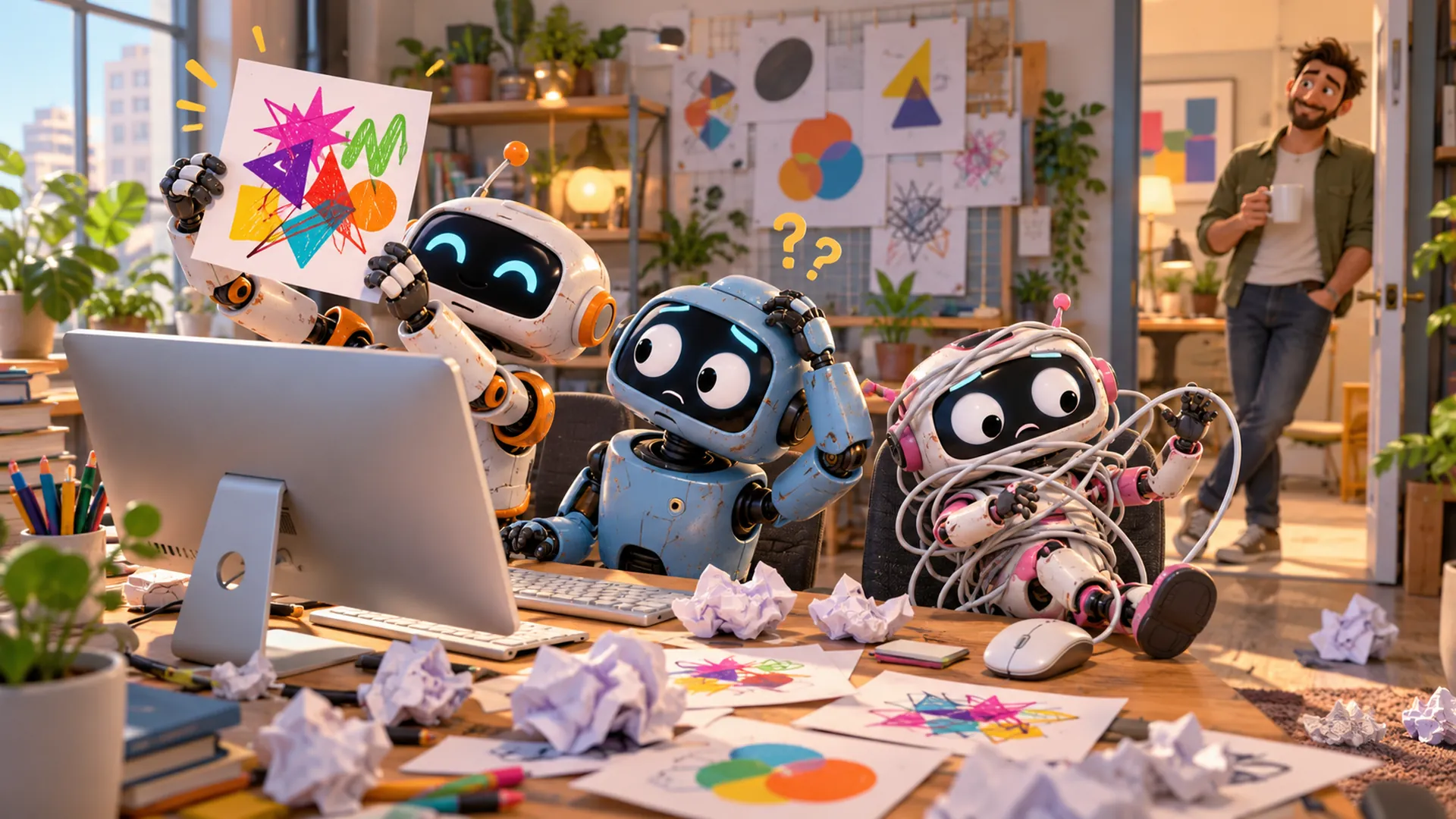
AI design tools have come a long way. Type a prompt, and seconds later you have a logo, a social graphic or a flyer. For a quick one-off, that can feel like magic. However, once the novelty wears off, many businesses find that DIY AI design creates as many problems as it solves. Here is an honest look at where AI helps, where it falls short, and why a human designer still delivers better results for most brands.
Where DIY AI design genuinely helps
To be fair, AI tools have their place. They are fast, cheap and available at any hour. They are useful for:
- Rough ideas and mood boards before a proper brief
- Quick internal graphics that will never be seen by customers
- Resizing or tweaking existing assets
- Exploring directions when you are not sure what you want
In other words, AI is a handy starting point. The trouble starts when it becomes the finished product.
1. DIY AI design does not understand your brand
A good designer learns your business: your audience, your tone, your competitors and what makes you different. AI tools, by contrast, generate something that looks plausible based on millions of other images. The result is often generic. Worse, it can look remarkably similar to what everyone else is producing with the same tools.
Your brand is supposed to set you apart. Design that blends in is not doing its job.
2. Consistency falls apart quickly with DIY AI design
One AI graphic might look fine on its own. Ten of them, created over a few months, rarely look like they came from the same business. Colours drift, fonts change and layouts vary. A human designer works to your brand guidelines every time, so your social posts, brochures, signage and website all feel connected.
Indeed, consistency is one of the biggest drivers of brand recognition. It is also one of the first things to slip with DIY design.
3. The detail is where AI still struggles
AI-generated design often has small flaws that undermine trust. For example:
- Garbled or misspelt text, especially in smaller type
- Odd details in images, such as hands, faces or product shapes
- Poor hierarchy, so the key message gets lost
- Files that are low resolution or the wrong format for print
Customers notice these things, even if only subconsciously. A designer checks every detail before anything goes out.
4. Print and production need real expertise
Designing for print is not the same as designing for a screen. Bleed, colour profiles, paper stock and file setup all matter. Get them wrong and you can end up with a box of leaflets that looks nothing like the preview. A human designer prepares print-ready artwork and knows how to avoid costly reprints.
5. Ownership and originality matter
Copyright around AI-generated work is still a grey area, and the UK government has been consulting on how copyright should apply to AI. Some tools draw heavily on existing images, and AI-made logos may be difficult to protect as trademarks. If your brand identity is central to your business, you want something original that you clearly own. Working with a designer gives you that certainty.
6. DIY AI design costs you time
DIY AI design is often sold as a time saver. In practice, many people spend hours rewriting prompts, regenerating images and fixing results in another app. That is time taken away from running your business. Handing the work to a designer means you write a quick brief and get back to what you do best.
7. A designer thinks, not just makes
Perhaps the biggest difference is strategy. A good designer asks questions. Who is this for? What do you want them to do? Is this the right format at all? That thinking often leads to a better outcome than the one you first asked for. AI simply does what it is told, even when the brief could be improved.
AI and human design: the best of both worlds
This is not about rejecting technology. Many designers, ourselves included, use AI tools to speed up parts of the process. The difference is that a human stays in control, applying judgement, taste and brand knowledge to every piece. You get the efficiency of modern tools without the generic results.
Human design without the agency price tag
Cost is often the reason people turn to DIY AI design in the first place. Design Shake offers unlimited design requests from experienced human designers for one simple monthly fee, so professional design is far more affordable than you might expect. See how we compare in our honest comparison of in-house, agency and subscription design, or find out how a graphic design subscription works. Ready to brief your first request? Our guide on how to write a design brief will help you get it right first time.