
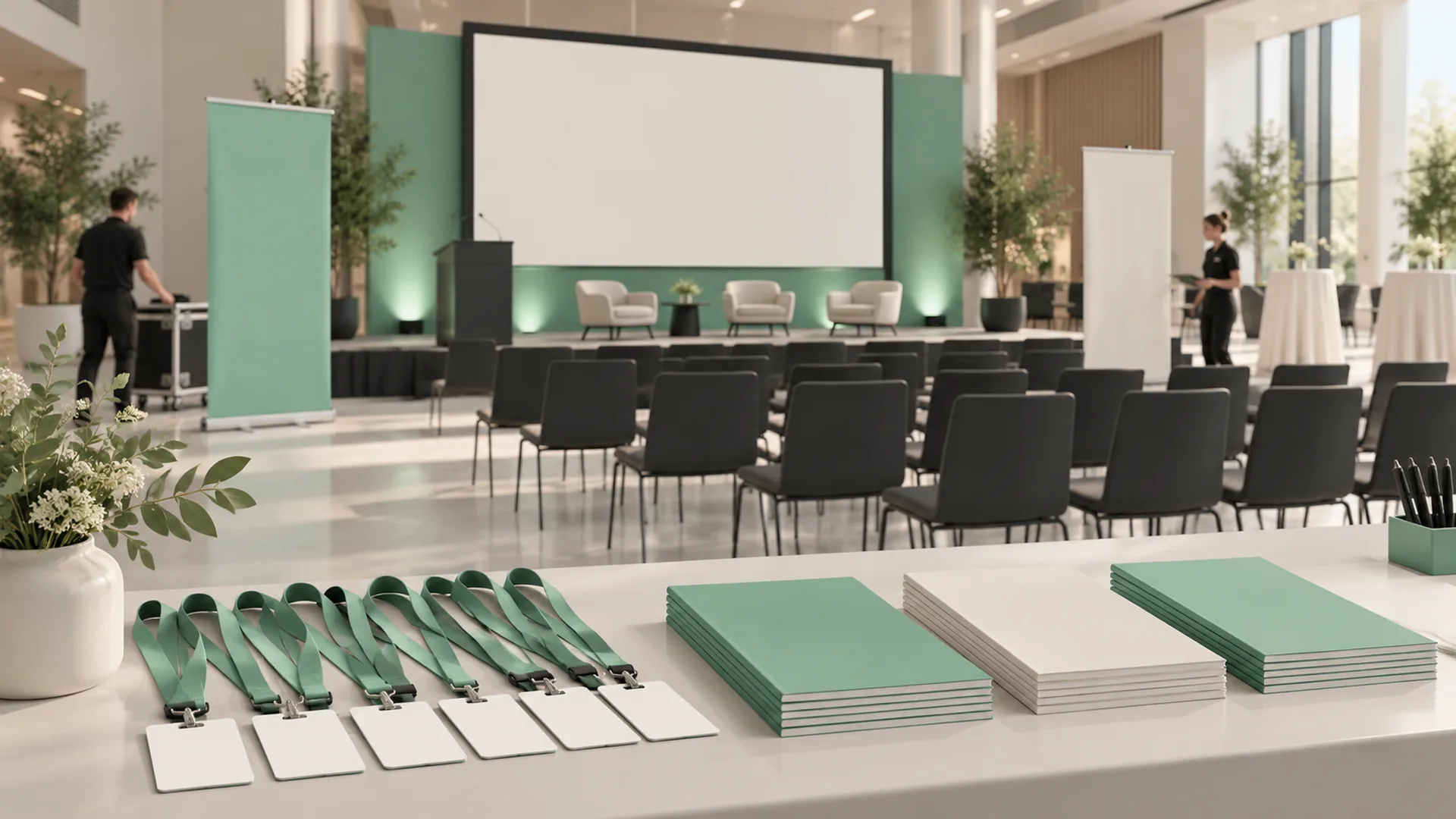
Events have a habit of generating far more design work than anyone expects. Indeed, even small events need more assets than you might think. A conference that starts with a logo and a banner quickly grows into dozens of assets across print, digital and on-site signage, all with immovable deadlines. This event design checklist breaks down what you are likely to need and when, so nothing is left to the last minute.
Three to six months out: build the event identity
- Event logo or lockup, including versions for dark and light backgrounds
- Colour palette, fonts and a simple style guide so everyone stays consistent
- Save-the-date email and social graphics
- Event website or landing page assets: hero images, speaker card templates, sponsor logo layouts
- Sponsorship prospectus or pack
Getting the identity right first saves a huge amount of time later. As a result, every asset that follows can be built from the same templates rather than designed from scratch.
Two to three months out: promotion
- Speaker announcement graphics for social media
- Paid social and display ad sets in all the sizes you need
- Email header banners for each campaign send
- Ticket and registration page graphics
- Partner and sponsor promotional kits, so they can share the event too
Four to six weeks out: print and on-site
Print has the longest lead times, so leave time for proofing and production. In addition, check stock and finishes with your printer early.
- Pull-up banners and backdrop or step-and-repeat walls
- Wayfinding signage, room signs and floor plans
- Delegate badges and lanyards
- Printed programmes or agendas
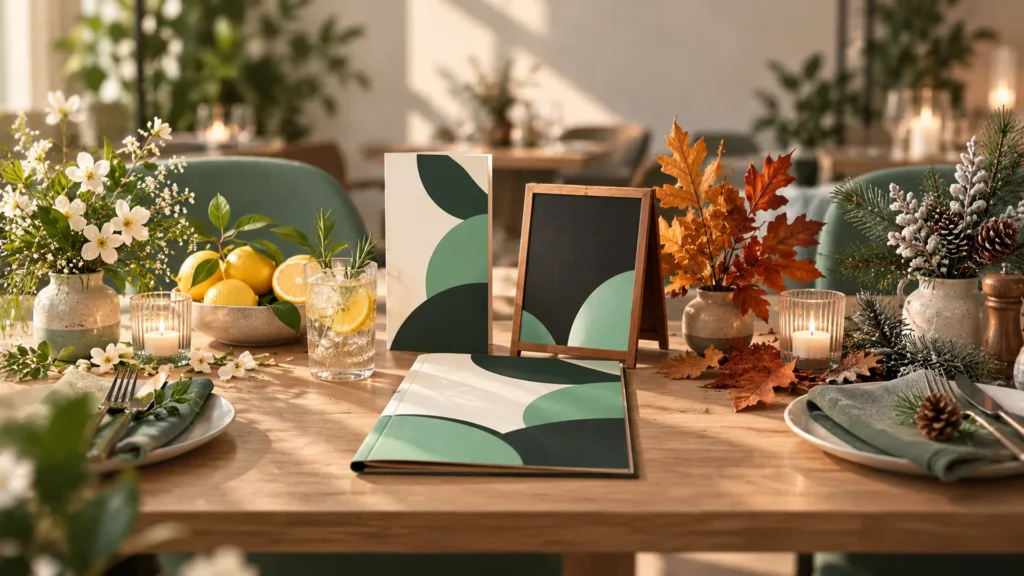
- Table talkers, menus and catering signage
- Exhibitor stand graphics, if you are providing them
One to two weeks out: the details
- Holding slides, walk-in slides and stage screen graphics
- Presentation template for speakers, sent early so they actually use it
- Session title slides and sponsor thank-you slides
- Live social templates for posting during the event
- Last-minute agenda changes (there are always some)
After the event
- Thank-you emails and social posts
- Highlight graphics and quote cards from speakers
- Post-event report or sponsor report
- Save-the-date for next year
Tips for using your event design checklist
Build templates early. A speaker card template, a social template and a slide template will cover a large share of your requests.
Keep one master list. Turn this event design checklist into a single tracker. Then log every asset, size, deadline and owner in one place. It makes briefing much faster.
Plan for changes. Inevitably, speakers drop out, sessions move and sponsors sign late. Budget time for amends.
Use one design partner. By contrast, spreading work across several freelancers often leads to inconsistent results and more management time.
Design support for your next event
Design Shake helps events and conference teams produce everything from the first save-the-date to the final sponsor report, for one simple monthly fee. Send requests as they come up and we will keep everything on brand. New to the idea? Find out how a graphic design subscription works.